Thanksgiving provides a natural moment to explore the concept of gratitude with your child, but conversations on the topic can benefit your child’s emotional and physical health all year.
Gratitude does more than create good manners, said Brandon White, vice president of programming and operations at First Tee – Greater Chicago and a member of First Tee’s national Programs Council. “Gratitude plays a key role in helping children understand the importance of connecting actions and emotions,” he said. “A simple act of kindness can trigger positive emotions that may have a lasting impact on a child’s life.”
It’s a common tradition to share what you’re thankful for at the Thanksgiving dinner table. But consider asking questions that invite a story. Examples include:
- Who helped you this week, and how did it feel?
- What is something that was hard but you’re glad you stuck with?
- Who is someone you would like to thank, and what would you say?
Open-ended questions give children room to reflect, and they often lead to conversations you will remember long after the dishes are done.
Notice the people behind the good things
Young people can see what they have without always seeing who made it possible. Help your child connect the dots. A ride to practice, a teacher who stayed after class, a coach who believed in them: each one is a person who gave time and care.
When your child names someone, take the next step together. Write a short note, make a call or say thank you in person. Gratitude grows when it is expressed, and children learn what it looks like by doing it.
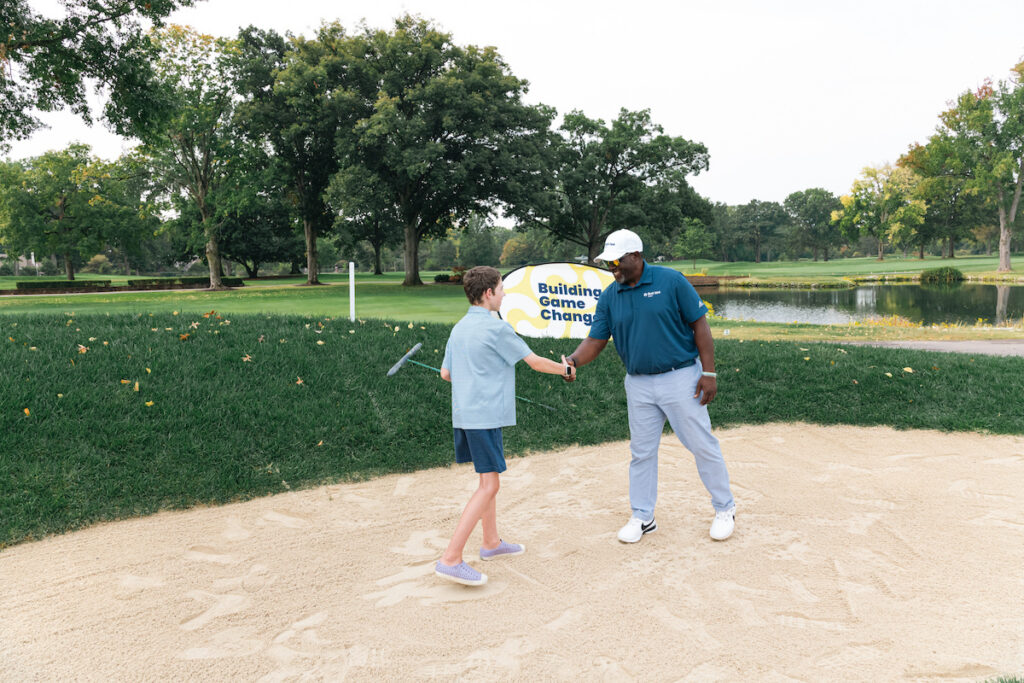
White sees this on the golf course every day. “Golf is a game where a tremendous amount of respect is shown to fellow competitors and the golf facility,” he said. Players show gratitude by replacing divots, repairing ball marks and shaking hands with their playing partners at the end of a round. These small habits are gratitude in action, and they help kids notice the people and places that make the game possible.
Appreciate the different ways people show up
The people we are grateful for do not all look, sound or think alike, and that is a gift. Thanksgiving often brings together relatives, friends and neighbors with different backgrounds, traditions and points of view. Invite your child to notice what each person brings to the table: a story from another generation, a recipe passed down through a family, a perspective they had not considered.
Appreciating diversity starts with curiosity and respect, and gratitude is a natural place to practice both.
Recognize that good things happen together
Few good things happen alone. The meal on the table took many hands, and so do most of the accomplishments we celebrate. Talk with your child about the times they have worked with others, whether on a team, in a classroom or at home, and how each person’s contribution mattered.
White says gratitude also plays a role in perseverance. It connects people who are working toward a common goal. “When teammates lean on each other’s skill sets and push through the difficult times to achieve their desired outcome, gratitude is expressed among teammates,” he says. “Every team member was a part of the struggle and the journey to achieve their team’s success.”
Share your own
Children learn a great deal from what they hear us say. Let them hear you be specific: “I am grateful to your aunt for covering my shift so we could be here today.” Share a time when you were thankful for something that did not come easily, too. When kids see that gratitude is part of how you handle both good days and tough ones, they begin to see it as part of who they are.
Modeling gratitude can be simple. White suggests parents show appreciation when their child helps with tasks or chores or takes the initiative to help others. Parents can also thank someone in public, such as a stranger who holds a door open. “In the golf space, parents can model gratitude by having an appreciation for being a part of the golf journey with their child,” he says. “Golf is one of the only sports where parents can continue to participate with their child for a lifetime.”
Keep it going after the holiday
One conversation will not make gratitude a habit, but small routines can. Try one of these:
- Share one “high” and one “thank you” at dinner each night
- Keep a family jar where everyone drops in notes of appreciation
- End the day at bedtime by naming one person who made a difference
Consistency matters more than perfection. Even a minute a day shows your child that appreciation is something we practice, not just something we say.
At First Tee, we believe the lessons young people learn through our programs reach well beyond the course. Gratitude, appreciating diversity and collaborating with others all shape the kind of people our participants become. Whether it happens on the practice range, at the dinner table or in the car on the way home, every conversation helps your child build the character they will carry for life.
This Thanksgiving, we are grateful for the parents, coaches, volunteers and partners who help young people grow. Thank you for all you do.
Learn more about supporting First Tee.